Ndustry information
UntitledCommon Defects of Precision Mold Cores & How We Avoid Them During Machining Post
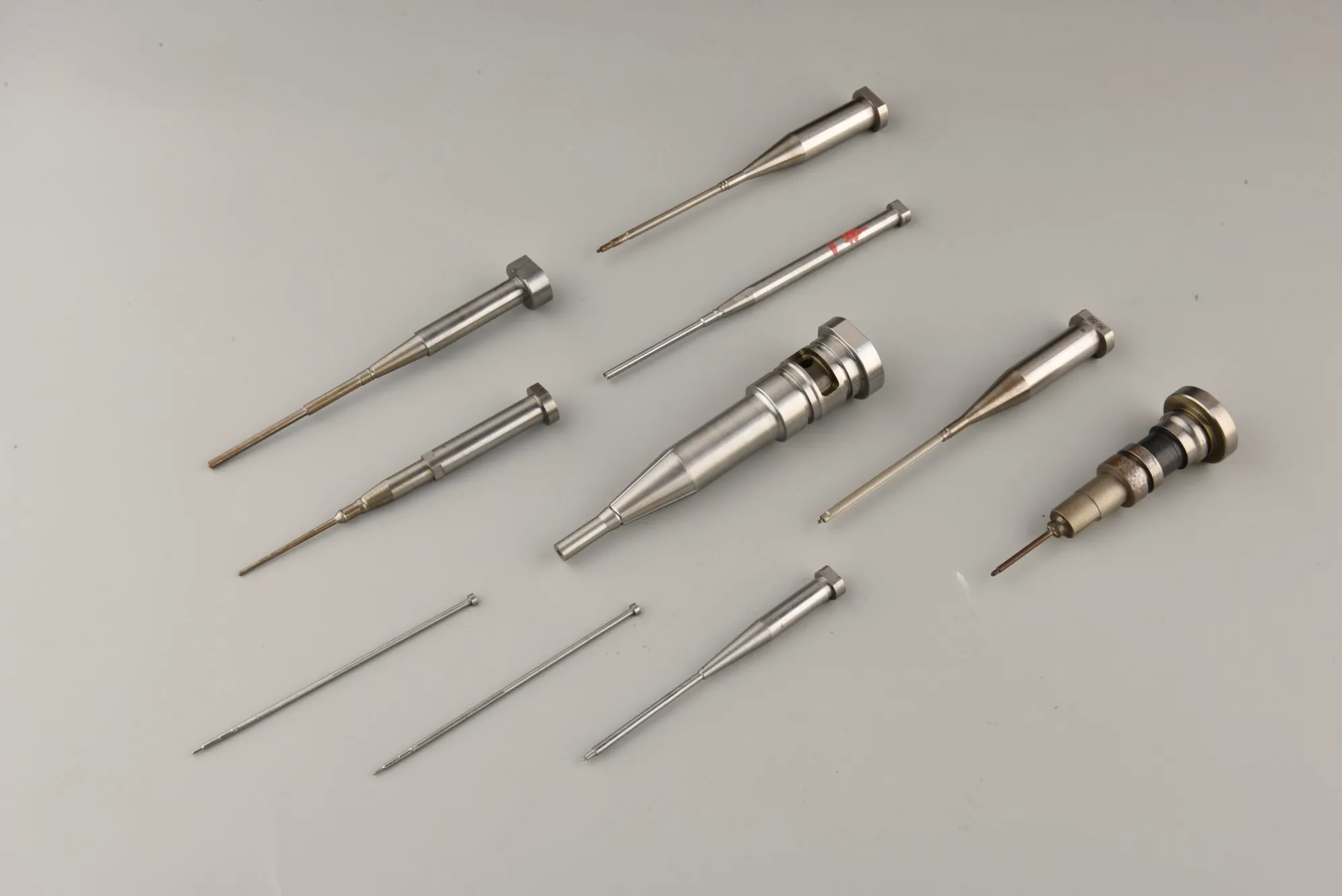
Even with high-end CNC and EDM machines, precision mold cores may still have hidden defects that ruin your molding yield. Understanding these typical problems helps you pick a qualified precision mold core machining supplier.
、
- Uncontrolled material deformation after heat treatmentThin mold cores and slender inserts are easy to bend or warp after quenching. Many suppliers only rough machine before heat treatment and skip stress relief. We add stress-relief aging between roughing and finishing, and use vacuum heat treatment plus cryogenic treatment to stabilize the steel, minimizing deformation within controllable range.
- Poor surface finish and EDM pitting on sealing edgesPitting, orange peel texture and uneven spark marks on parting lines will cause flash on plastic parts. We adopt mirror EDM process with fine graphite electrodes, optimize spark parameters, and follow up with manual or mechanical polishing for sealing surfaces, reaching Ra 0.02μm or higher for cosmetic mold cores.
- Dimension drift caused by unstable clampingMultiple clamping in CNC processing brings cumulative positioning error. For complex mold cores with multiple forming surfaces, we design special fixture jigs to complete most features in one clamping setup, reducing repositioning error effectively.
- Hidden burrs at sharp corners and narrow slotsTiny burrs at sharp corners are hard to detect and will scratch molded parts or cause plastic residue buildup. Our wire EDM and finish grinding process removes micro burrs, and every corner is checked by microscope before delivery.
Our QC team runs full inspection on every finished mold core with CMM and optical vision machines. We send complete inspection reports together with your goods.